Celebrating Deepavali & the arts in Singapore
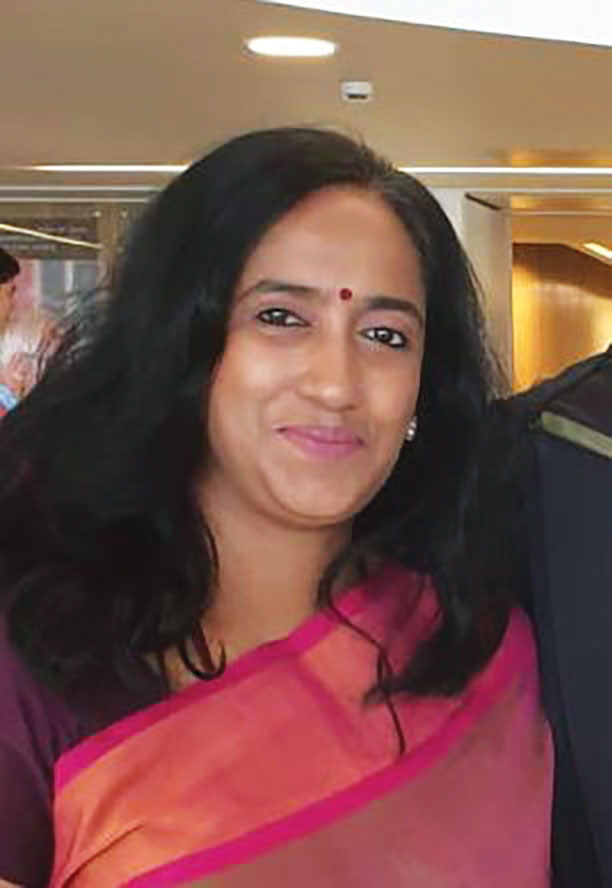 Deepavali – or Diwali – is one of Singapore’s brightest and most beloved festivals, lighting up the city with joy, colour, and tradition. Celebrated by Hindus and many others across the Indian community, it marks the triumph of light over darkness and good over evil. It’s a time of oil lamps, sweet treats, sparkling saris, and gatherings with family and friends. This year, the holiday falls on 31 October 2025, with Little India set to dazzle. To mark the occasion, we catch up with K Jayaprema, Founder and Creative Director of Rhythms Aesthetic Society in Singapore (rhythms.org.sg), to talk about how the local arts scene works hard to preserve cultural heritage.
What is Rhythms Aesthetic Society?
The past 22 years have seen what began as an arts school evolve into three key pillars: a School for Indian Fine Arts, a Production House, and an Indian Cultural Hub. We teach students from age five to their sixties everything from Bharatanatyam (classical Indian dance) to Carnatic violin, Sangeetham (a form of Indian classical music), and religious folk dance like Kavadi Attam. We stage regular student performances under our Anubhavagriha programme, helping them gain confidence through stage experience. Our Kala Seva programme brings intergenerational performances to nursing homes, giving students the chance to give back through the arts. We also collaborate with schools, community centres, and the Indian Heritage Centre for workshops, cultural trails, and storytelling sessions. Rhythms isn’t just about performance – it’s about participation, appreciation, and community.
What does Deepavali mean to you?
It’s the festival I hold dearest. Growing up in Singapore, in a kampung near Sri Darma Muneeswaran Temple, Deepavali meant the whole house was buzzing with the excitement of new clothes, sweets, flowers, guests, and prayers. My parents taught me the importance of honouring Narakasura before dawn, offering prayers to Lord Krishna, and seeking blessings from elders. That morning ritual, followed by a bountiful breakfast with the whole family, is my favourite part. We still observe these traditions today.
Were the arts always part of your life?
Oh yes – every Indian festival, from Pongal and Navaratri, to Shivaratri and Deepavali, was celebrated with devotion. We’d fast, pray, wear new clothes, and seek blessings from our elders. Living opposite a temple had its influence. I began Bhajan classes (devotional singing) at five, and soon after took up Bharatanatyam, Sangeetham, and Carnatic violin. I performed at temples and community centres. Classical Indian dance and music made me happy – they felt like home.
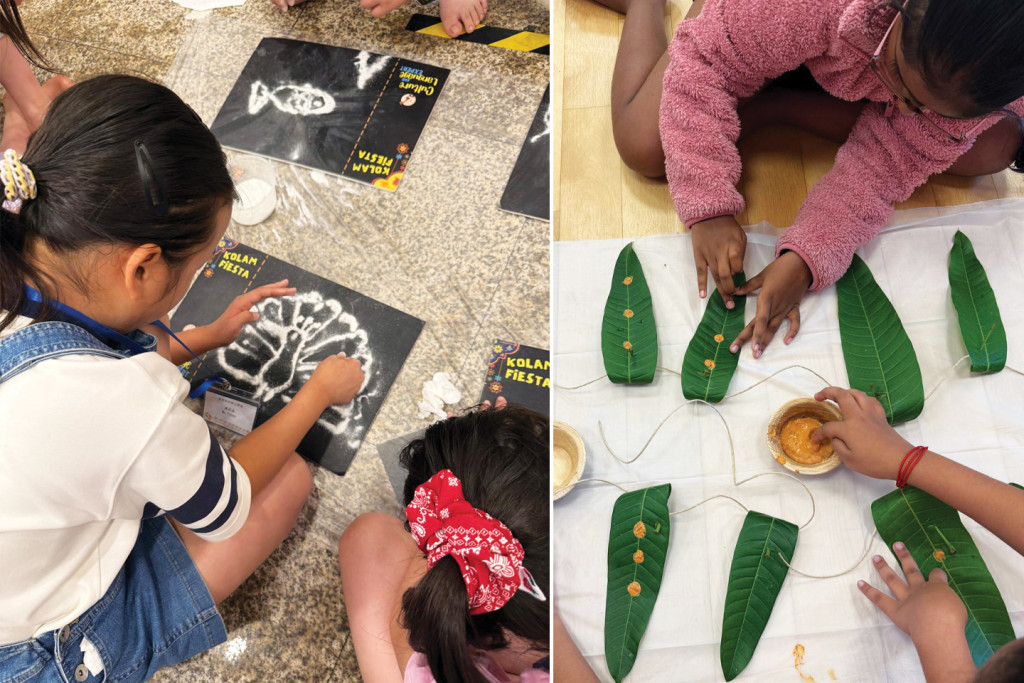
Children learning traditional decoration techniques
“Culture isn’t something to be performed once a year – it should be lived”
What inspired you to start cultural work and eventually Rhythms Aesthetic Society?
When my sons began school, I enrolled them in tabla (hand drums) and keyboard lessons. In 2003, a tabla teacher who’d lost his job asked me for help. I found him four young students – three were my sons! That moment set me on a lifelong path. Rhythms was born, and I’ve been promoting Indian fine arts ever since.
How does Rhythms mark Deepavali?
We support community celebrations by performing classical and folk arts at temples, community clubs, and cultural showcases. Rhythms also hosts trails through Little India, sharing stories and symbols of the season with locals and visitors.
What Deepavali traditions might surprise people?
Many don’t realise how deeply spiritual and inclusive the festival is. Beyond lights and sweets, we offer prayers to our ancestors; we decorate their photos, light camphor, and present food and clothing to honour their memory. Families often visit graves before the festival to pay their respects. Business owners also give gifts or ang pow to staff. There’s a strong spirit of generosity and no one is forgotten.
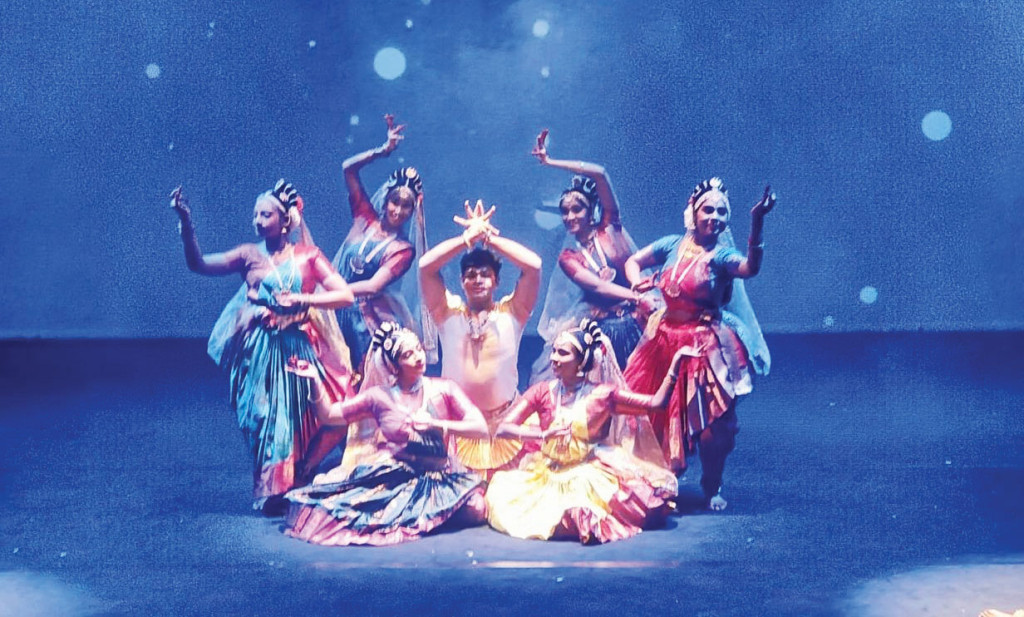
Indian Traditional Dance
Why are the arts so vital in preserving Indian heritage in SG, especially for younger generations?
Classical arts are more than technique, they teach reverence, discipline, and identity. Through dance and music, young people don’t just learn movements or melodies, they understand the culture’s depth. For instance, the act of bowing to your teacher, or honouring accompanists on stage, teaches humility. Wearing traditional attire connects students to history. Even if they don’t pursue the arts professionally, the exposure plants a seed.
How do you encourage students to stay connected to their roots?
We design performances around cultural festivals like Deepavali and Pongal, and we’re strict about traditional dress and stage etiquette. But we also make it relevant by explaining meanings, using storytelling, and sometimes blending old with new, while keeping authenticity intact. Culture isn’t something to be performed once a year – it should be lived.
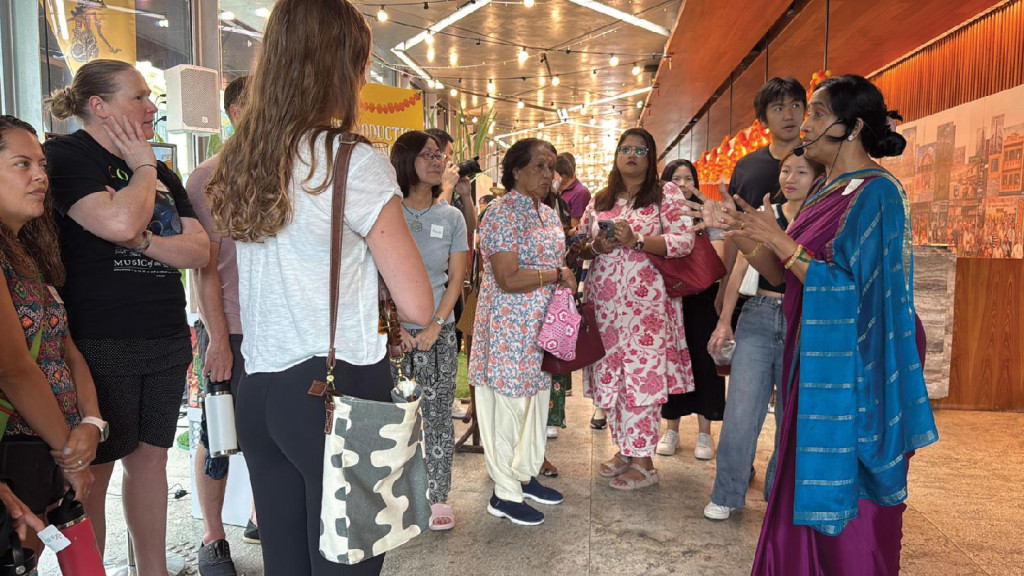
Learning about heritage on a Little India Experience Trail
How can expats respectfully enjoy Deepavali and Indian arts on the red dot?
By being curious and open-minded. Visit Little India, especially during the festive season, where temples, shops, and homes are full of authentic practices. Also, attend community events or workshops, many of which are now offered in English.
What are your hopes for the future of Indian arts in Singapore?
I hope for more regular platforms, beyond seasonal events, to showcase Indian arts. I want tourists and locals alike to see Singapore not just as a modern city, but as a place where heritage is alive and evolving. The Indian community here has its own unique identity, and through music, dance, and stories, we can share this richness with the world.
Head to ANZA’s Insider’s Guide section for more local reads and cultural insights