WWII Singapore: The Aussie & Kiwi caught in the conflict
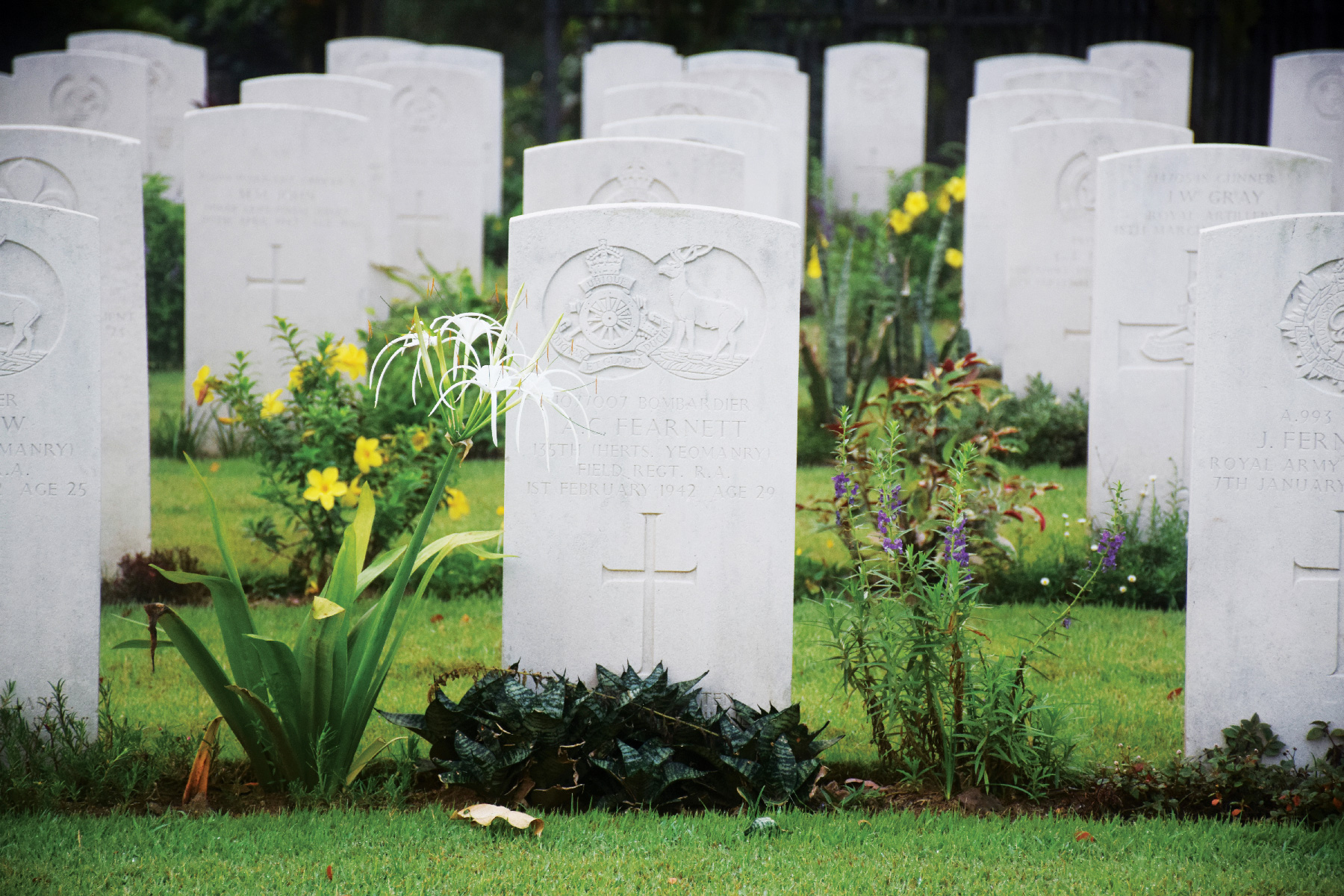
Jim Law and Graham Haggitt were expats in Singapore, just like you or me. Jim was an Australian accountant from Manly, Sydney, and Graham an estate manager from Nelson, New Zealand. Both had come to Malaya in their mid-20s to seek their fortune in the booming commodities markets – Malaya in the mid-1930s produced 40 percent of the world’s tin and 60 percent of its rubber output.
Jim was with the Austral–Malay Tin Mine Co and Graham with Dunlop’s. Although they didn’t know each other, they were similar characters from private school backgrounds. Sport was a big thing for both – Jim was passionate about swimming, rugby, and hockey at Sydney Grammar School, while Graham was athletics champion of Christ’s College, Christchurch.
Times were good, with prices and markets rebounding sharply after the Depression, but the rumours were persistent at the turn of the 1940’s: “Pssst! The Japanese are going to attack Malaya.” The lure of its rubber and tin was paramount to fuel Japan’s war efforts in China.
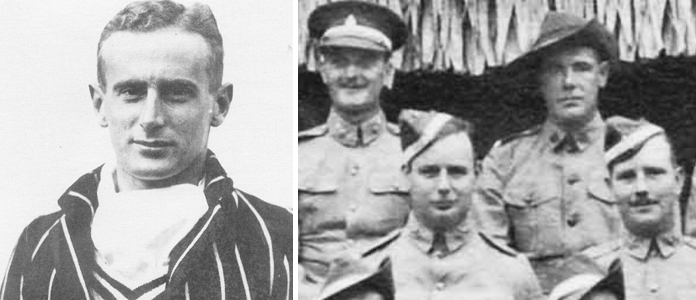
Left Kiwi Graham Haggitt. Right, front row, left: Australian Jim Law at OCTU in 1941 Image: Jonathan Moffatt
The war had begun
Jim and Graham did as everyone did and signed up with their local volunteer military outfits. Jim joined the Federated Malay States Volunteer Force (FMSVF), while Graham signed on with the Johore
Volunteers as a sapper (engineer). As the threat level rose, men with officer potential were put into the Officer Cadet Training Unit (OCTU) programme in Singapore. Here they were drilled for three months in leadership, battle tactics, and military skills by English officers.
Jim graduated as 2nd Lt James Law, 222064, and was added to the British Army’s General List – a floating pool of available officers who could be assigned to units as required. As he graduated in December 1941, Japan struck Pearl Harbour and Malaya at the same time. The war in the Pacific had begun.
Jim was seconded to C Company of the 1st Battalion, Malay Regiment, and thrown into the thick of torrid action up the north-west coast of Malaya. Can you begin to imagine? One minute you’re a mild-mannered accountant, the next, you’re issued a pistol and facing the rampaging Imperial Japanese Army (IJA), already seasoned by five brutal years in China. On top of that, you’re the only Aussie among a company of 120 Malay men and a few British officers.
Most Australians back home signed up with their mates and shipped overseas together. In those dark moments, you were at least surrounded by something familiar – the accent, the banter, the shared mission under your own flag. But not Jim Law, the lone Aussie.
The same went for Haggitt, the lone Kiwi. After the OCTU programme, as 1942 was rung in, 2nd Lt Graham Haggitt, 223334, was placed on the General List and assigned to A Company of the Malay Regiment’s 1st Battalion.
The Allies were soon on the back foot down the peninsula, retreating until the drawbridge of ‘impregnable’ Singapore went up behind them.
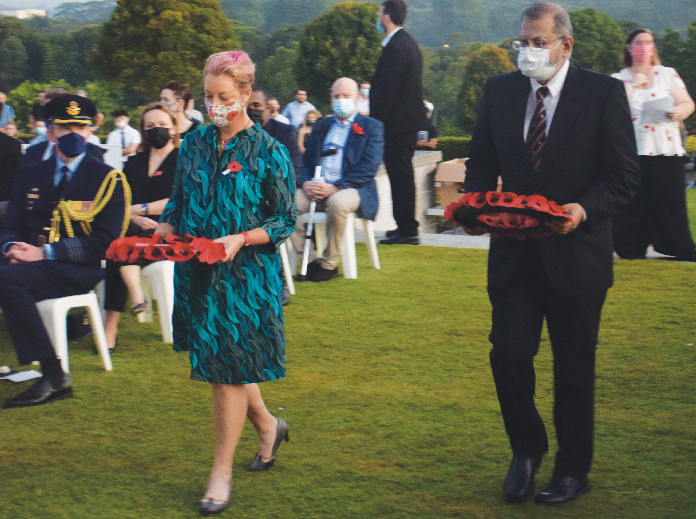
ANZAC Day 2022
In the thick of it
The guns of February 1942 from both sides reached a deafening crescendo. With the British commanders falling for the Japanese feint to the east (a decoy attack on Pulau Ubin), it left the Aussies, Malays, and Indians to face the brunt of the Japanese thrust onto the north-western corner of Singapore.
The west coast was an attractive target because it housed a lot of British military infrastructure: Gillman Barracks, Normanton Camp and Warwick Road Admiralty oil tanks, Alexandra Military Hospital, and munitions magazines at Depot Road. Then just beyond that, the glittering prize – Singapore itself.
The IJA 18th Division fought ferociously against the Aussie 2/18th Regiment around Holland Village and Reformatory Road. Meanwhile, the Malay Regiment’s 1st Battalion was assigned to defend the high ground of Pasir Panjang Ridge, including Kent Ridge and Bukit Chandu.
 On Thursday, 12 February 1942, just three days before the Fall of Singapore, mortars thudded into the Malay Regiment’s 1st Battalion positions near Pasir Panjang Village. Here, 27-year-old Lt Jim Law was tragically killed in action, just three days short of the end of the Battle for Singapore. Eye-witness accounts of the battles around Kent Ridge describe mortars and artillery falling in such quantities and at such a rate that it was mistaken for heavy machine-gun fire.
The Malays’ A Company was in the thick of it and effectively wiped out. Twenty seven-year-old 2nd Lt Haggitt lost his life in this hail of shells. His commanding officer, Col J.R.G. Andre, later wrote: “It was the bravery of such officers that earned the battalion a good name for its conduct during the fighting immediately preceding the Fall of Singapore.”
The next day, C Company was slightly to the south on the burning slopes of Bukit Chandu, where oil and grass fires raged and visibility was virtually nil. Their company commander was killed, so 2IC Capt Harry Rix assumed command. He exhorted his men to stand firm in a desperate last stand, true to their regimental motto ‘Ta’at dan Setia’ – meaning loyal and true, and also possibly interpreted as last man standing.
No sooner had Rix uttered these words than he was cut down in a volley of machine-gun fire. The Allied surrender came a couple of days later.
Fortunes can change
Post-war, Graham Haggitt was buried in Kranji War Cemetery, 8,600km from where he was born. No remains of Jim Law were found. His name was added to the Singapore Memorial Wall, but not recorded on the Australian War Memorial Roll of Honour, as he’d signed up under the British Forces (being an expat in Malaya at the time). It was only after vociferous advocacy by the North Steyne Surf Lifesaving Club that his name was added to the Manly War Memorial.
The Reflections at Bukit Chandu interpretative centre on Pepys Road (nhb.gov.sg) commemorates the actions of the Malay Regiment – which celebrates its 90th anniversary in 2025 – at the site of their famous last stand in Singapore. Being on-site where these actions took place is a sobering reminder of how quickly times and fortunes can change.
Both 2nd Lt Law and 2nd Lt Haggitt were just two of 159 of the regiment’s officers and men tragically killed in action in WWII. But being the only Aussie and Kiwi, they deserve a special mention as ordinary expats who did extraordinary things for King and country when the call came.
Lest we forget.
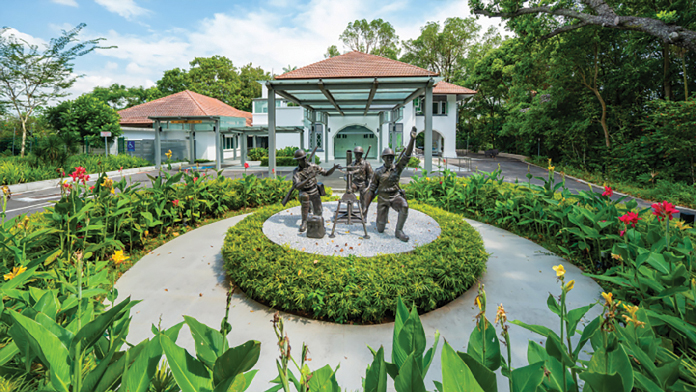
Photo by NHB
Stuart Lloyd is an Australian author who lived in Singapore for 10 years. His most recent book is The Malay Experiment: The Colonial Origins and Homegrown Heroics of the Malay Regiment. stuartlloyd.net
Main Picture by Gerald Ward. Pic of The Reflections at Bukit Chandu interpretative centre: NHB