Are you a midlife phone addict?
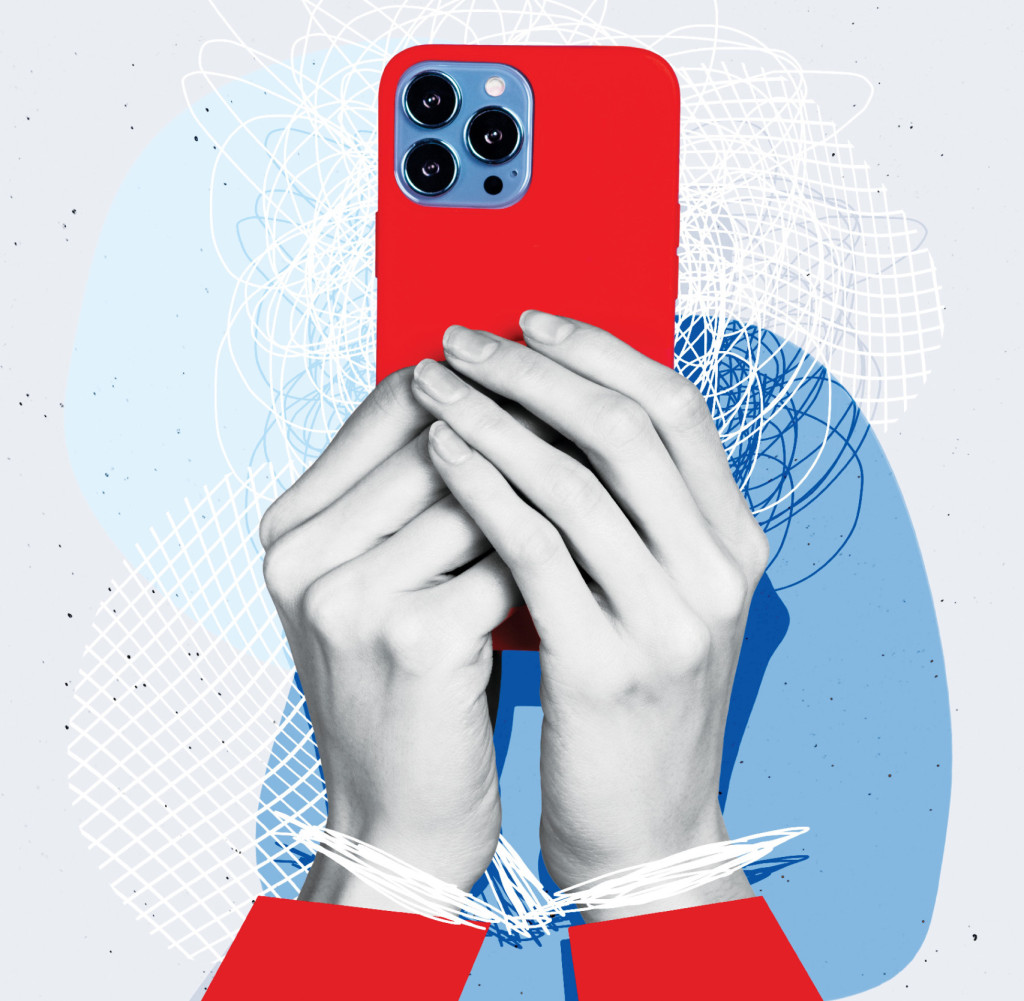
Be honest – how many times have you glanced at your phone while flicking through this very magazine? Chances are it’s frequently, and your brain is now not only buzzing with how brilliant the ANZA community is, but you’ve also watched footage of a stranger on holiday, and a random dog saying ‘sausages’.
While Gen Z might get all the screen-time side-eye, a growing number of midlife adults are also finding themselves deep in a digital rabbit hole – scrolling, swiping, and stress-liking their way through their day with no real intention. Recent research from the Pew Research Centre shows that adults in their 40’s and 50’s have increasingly adopted social media, and according to Dr. Ronina Stevens, Clinical Psychologist and Director at The Other Clinic (theotherclinic.sg), this behaviour is reflected on the red dot. “We’re seeing more people in midlife struggling with anxiety, poor sleep, and low self-esteem, all of which can be traced back to unchecked phone and social media use,” Dr. Stevens says.
Today, it’s not just the kids who are likely to be glued to Instagram, WhatsApp, TikTok and Facebook, but also their parents. So, what can the older generations do to improve their online lives in 2025?
Mindless scrolling

“A growing number of midlife adults are scrolling, swiping, and stress-liking their way through their day”
Staying connected is obviously a major perk when it comes to phone usage, especially in expat-heavy cities like Singapore, where people are living away from home. Social media platforms allow us to stay connected with friends and family, particularly those who are far away, and it can also help us to find support communities. This is especially helpful for those going through life changes, such as parenting or pivoting in their career, where they can connect with others going through similar experiences.
However, for people in their 40’s and beyond, Dr. Stevens shares that she’s seeing common effects of usage which include increased depression and irritability. “Studies suggest that social media can amplify feelings of inadequacy through constant comparisons, which often leads to lower confidence,” she says. “For some people, hyper-connectedness can create a sense of being overwhelmed, as they’re always ‘on,’ which affects their mental health in the long run. It’s important to remember that the effects are cumulative, and consistent tech use without boundaries can really take a toll.”
So while we may chastise the younger generations for their constant online behaviour, it might be time to check ourselves. Unlike younger generations who’ve grown up with digital devices and often develop natural boundaries around usage, many midlifers engage with social platforms without the same level of mindfulness. As Dr. Stevens puts it, “Midlife users often engage with these platforms without the digital literacy or restraints that younger generations have grown up developing. This can lead to more passive swiping and less critical awareness.”
Even Dr. Stevens admits that she’s not immune. “It’s that autopilot behaviour that is so synonymous with today’s society – reaching for the phone without purpose,” she says. “It disrupts sleep, messes with our nervous system, and leaves us feeling mentally scattered. I noticed that for me, being on social media was becoming almost habitual. It was the first thing I did when I got up – I’d have a quick scroll – and it was the last thing I did at night before I switched off my light.”
Chances are that this behaviour sounds familiar. So, how do we hit pause on the doomscrolling and take control of our screen time, without throwing our phones in the Singapore river?
Using with intention
It helps to start by being more deliberate with your usage. When used with intention, social media can be a lifeline, especially in the often-transitional midlife phase. According to a study published in the online journal Nature Human Behaviour (which involved almost 90,000 adults in 23 countries), regular internet use was associated with a nine percent reduction in depressive symptom scores, a seven percent increase in life satisfaction scores, and a 15 percent rise in self-reported health scores among the over-50’s age group, compared with those who went online rarely or never.
“Platforms can help people connect,” confirms Dr. Stevens. “They can offer support, community, and even inspiration. The key is to curate your feed like your wardrobe. If something doesn’t make you feel good, ditch it.“ Her advice is to only follow accounts that energise you. Mute or unfollow ones that leave you feeling less-than. And check in with yourself regularly: ask how do I feel after being online?
Start using your device consciously. Social media shouldn’t be your default downtime activity, make it one of many things you do, alongside walks, hobbies, conversations, and rest. Deleting social media altogether isn’t necessary for most people. Instead, Dr. Stevens advocates for balance and shares that to avoid digital burnout, midlife clients can establish simple routines around their phone use. “I suggest setting specific times to check your social media and sticking to it. It’s about reclaiming time for offline activities that nourish your mental wellbeing, like meeting friends or joining an ANZA activity group.”
What am I looking for?
Of course, even when putting in genuine effort, our phones are designed to be distracting. While social media has become a huge part of modern life, deleting it altogether could leave you out of the loop socially. Sure, you can set daily time limits on Instagram, but it’s easy to override them with a quick click. Dr. Stevens recommends using tools that make habitual use a little trickier. Apps like Forest (forestapp.cc) reward users for time spent away from their phones by growing virtual trees and earning coins to plant real ones in countries like Cameroon, Kenya, and Uganda. If you exit the app early, your tree dies. Freedom (freedom.to) blocks specific apps and websites, letting you schedule distraction-free time, while One Sec (one-sec.app) introduces a pause before an app opens, prompting you to ask: do I really want to be here?
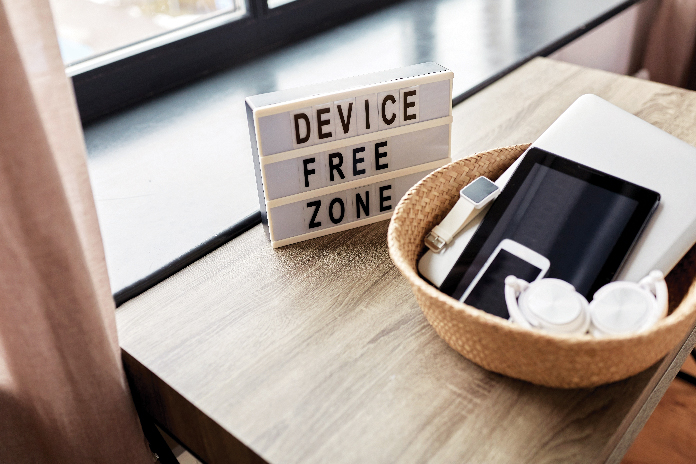
Taking longer breaks is also helpful in theory, but we all know how easy it is to reach for your phone while in a meeting, on the MRT, or out for coffee. That’s where a psychological trick called “friction” can help. “Move your social media apps off your home screen, make them the same colour as your home screen so they’re less eye-catching, or put them in a folder labelled ‘Do I really need this?’” suggests Dr. Stevens. She also recommends setting firm phone-free zones, like no phones in the bedroom, scheduling regular digital detox days (screen-free Saturdays, anyone?), and keeping devices out of sight when socialising.
So, the next time you catch yourself deep in a scroll spiral, stop and consider: what am I really looking for? You might find that the connection, calm, or clarity you’re chasing isn’t in your phone – it’s in the moments you reclaim away from it.

Dr. Ronina Stevens’ 7 Tips To Swiping Smarter
- Make it harder to scroll
Use “friction psychology” by moving social apps off your home screen, changing their icons to grey, or hiding them in folders. A little resistance goes a long way - Create tech-free zones
Designate areas in your home (like the bedroom or dining table) where phones are off-limits. These digital boundaries give your brain room to breathe - Set social hours
Limit your social media check-ins to set times each day. You’re more likely to use the apps with intention, and less likely to spiral into a scroll-fest - Do a digital detox
Pick one day a week (or even a few hours a day) to unplug. Use that time to read, walk, potter about, or have a real-life chat with a friend - Curate your feed
Follow uplifting, informative, or entertaining accounts that add value to your life. Unfollow or mute anything that triggers comparison or low mood - Reflect before you tap
Ask yourself: why am I opening this app? What do I need right now – connection, distraction, or affirmation? Redirect accordingly - Prioritise real rest
Late-night scrolling messes with your sleep. Swap your phone for a book or podcast after 9pm and notice the mental shift
Discover more expert advice on navigating life (in and out of Singapore!) in our Lifestyle section