Tuckerbox: Lunar grazing over CNY 2026
 Perhaps we are familiar with dragon and lion dances, red banners, mandarins, noodles, pineapple tarts, family reunions, and other auspicious symbols, on New Year’s Eve and New Year’s Day. Traditional food items are also associated with customary events throughout the 15-day festival. For example, about one week before Chinese New Year (11 February), many families bid farewell to the kitchen god as he reports to the Jade Emperor in heaven on the family’s activities during the past year.
Families gather in their kitchens, offering predominantly sweet items to the deity, including sticky lollies/candies, rock sugar, sweet rice dishes, dumplings, fruit, plus fish, hoping for a ‘sweet’ report to be given. Upon returning to the family-home on the fourth day of New Year (20 February), the kitchen god is welcomed with offerings of sweet food, plus fish (symbolising family togetherness as fish swim in schools), chicken (representing new beginnings), pork (a favourite meat of Chinese people), dumplings (signifying prosperity, being shaped like ancient Chinese money), vegetables and rice wine, while switching on the stove in his honour.
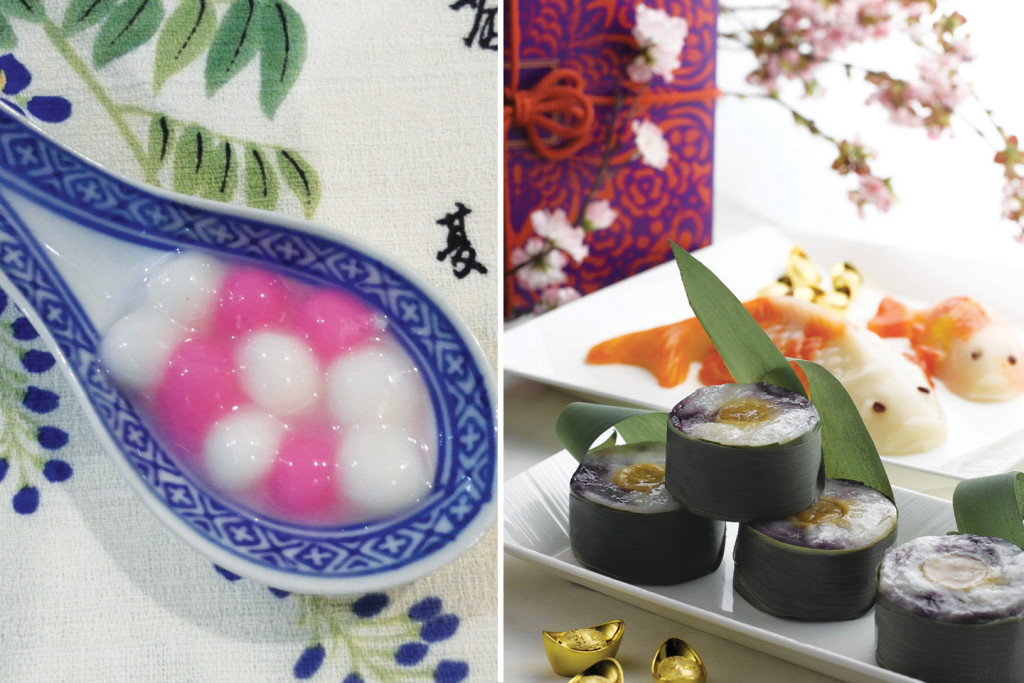
On the fifth day, 21 February, the god of wealth is feted in homes and businesses to celebrate his birthday. Dumplings are favoured to begin the day, alluding to prosperity. Other festive foods include noodles (longevity), fish, prawns (symbolising laughter, from phonic associations), spring rolls (prosperity), steamed buns (round in shape, denoting harmony), and nian-gao (steamed, round, glutinous-rice-cake, implying ‘rising higher every year’).
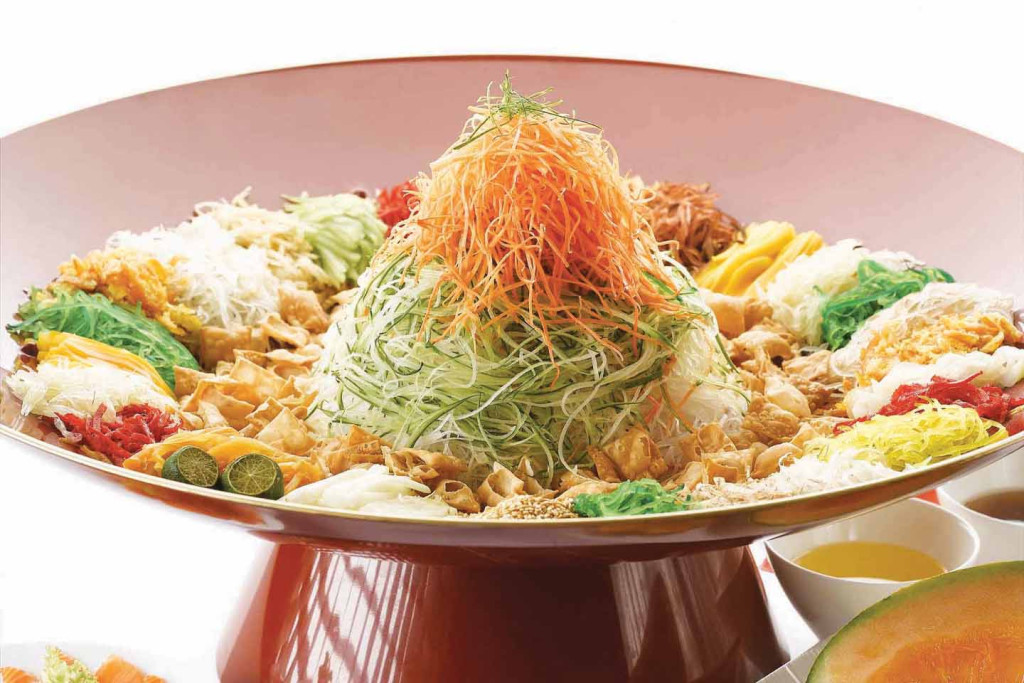
The seventh day, 23 February, is everybody’s birthday. The ritual of tossing and eating yu (fish/abundance)-sheng (life) sees much merriment, with diners mixing the many ingredients of this auspicious raw fish salad, to the shouts of “Lo-hei!” (“To raise up wealth”). One of my favourite days!
The Jade Emperor’s birthday, on the ninth day (25 February), is especially important for Hokkiens, who form the largest Chinese dialect community in Singapore. This dates back to the Mongol Dynasty, when Hokkien people in China were saved from warlords by hiding in sugarcane plantations. My Singaporean mother-in-law would prepare a large table at our family-home, complete with red candles, roast suckling-pig, steamed fish, boiled chicken, vegetables, dumplings, noodles, rice, round steamed cakes, pineapple (good luck coming), peaches (longevity), Chinese wine, and the main decoration of tall sugarcane plants, standing like sentinels guarding our family.
Chinese New Year festivities conclude on chap goh mei, the fifteenth night, 3 March, with family dinners where festive dishes include noodles, fish, pork, vegetables and tung-yuan (sweet round rice-balls).
Appreciating others’ cultures and food customs can enliven our friendships and our tastebuds.
“Xin Nian Kuai Le!” (“Happy New Year!”)
Photographs: Yu-sheng, nian-gao, courtesy Marina Mandarin Singapore. Tung-yuan from Raelene Tan
Discover more about life in Singapore in our IInsider’s Guide