“I trekked the Kokoda Track in honour of my grandfathers”
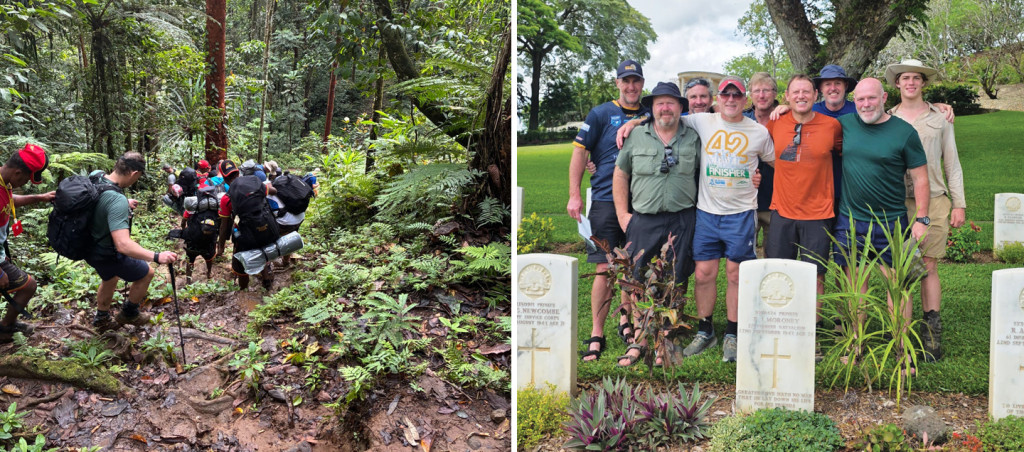
Right: PJ (front, second right) with his mates and Uncle Frank’s headstone
“The alarm goes off at 4.30am. Again. My body aches from yesterday’s relentless climb, and I know today will be no easier. Outside the tent, the Papua New Guinea (PNG) jungle is already awake – bird calls permeate the pre-dawn darkness. I pull on still-damp socks and emerge to find my nine mates doing the same. We’re Day Five into the Kokoda Track – the famous 138km jungle path in PNG’s Owen Stanley Range – and every muscle in my body is telling me why this trek has legendary status.
But as I stand there in the mud, I’m thinking about my grandfathers. Both my grandad on my father’s side and grandpa on my mother’s side fought in PNG during World War II. Grandad’s brother also served during the war. My great‑uncles Frank and Clem fought on the Kokoda Track and were also among the fabled Rats of Tobruk. Uncle Frank never made it home; he’s buried at Bomana War Cemetery in Port Moresby. Suddenly, my damp socks don’t seem like much to complain about.
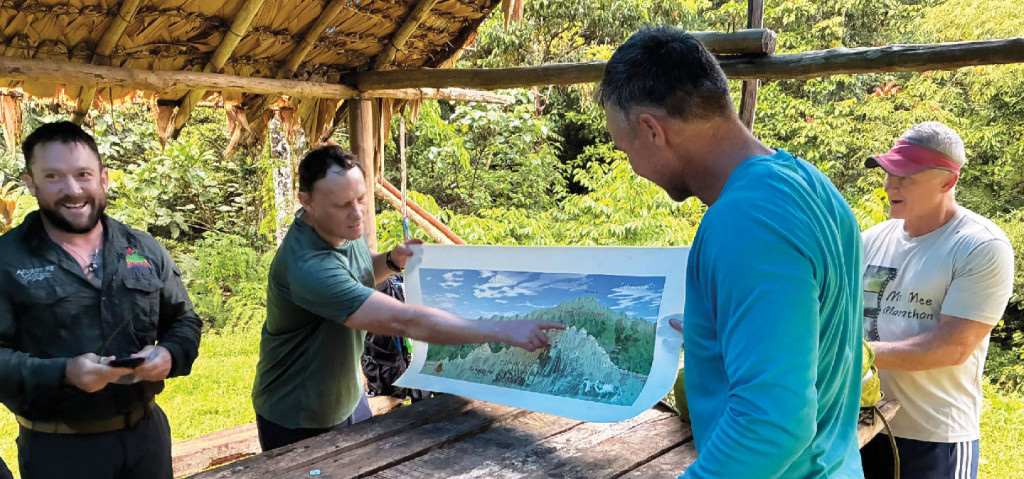
Morning de-brief before setting off
Mates & Plans
This journey to PNG began eight years ago when ten of us – all childhood friends from Marist Brothers in Canberra – took our first trip together to Cuba, Mexico, and the United States. When we were in our mid-thirties, we all decided to set up a holiday savings plan, with a bid to travel together and celebrate the friendship we shared despite now living scattered across the globe. We’d talked about tackling the Kokoda Track for a while. As Australians, the track holds immense cultural and historical significance. For me, living in Singapore where the Japanese captured the city in 1942, there’s an even deeper connection. When you understand that the Battle of Kokoda was pivotal in stopping the Japanese advance toward Australia, you realise just how critical this ground is to our nation’s freedom.
After lengthy planning, we locked in dates for September 2025. The trek would be 11 days total, with nine days of actual trekking, covering 15–20 kilometres daily through rugged jungle terrain.
I prepared like I was heading into football pre-season. Having played professionally in the past I knew about rigorous training, but this was something unfamiliar and unique for me. I focused on stairs, hill climbs, strength work, core stability, and training with weight on my back.
What I didn’t expect was how much the emotional preparation would matter. I immersed myself in the history of the trail, watching documentaries, listening to podcasts, reading everything I could. Learning about the battles, what those soldiers endured, and how it connects to my family’s story transformed this trip from a physical challenge into something profoundly meaningful.
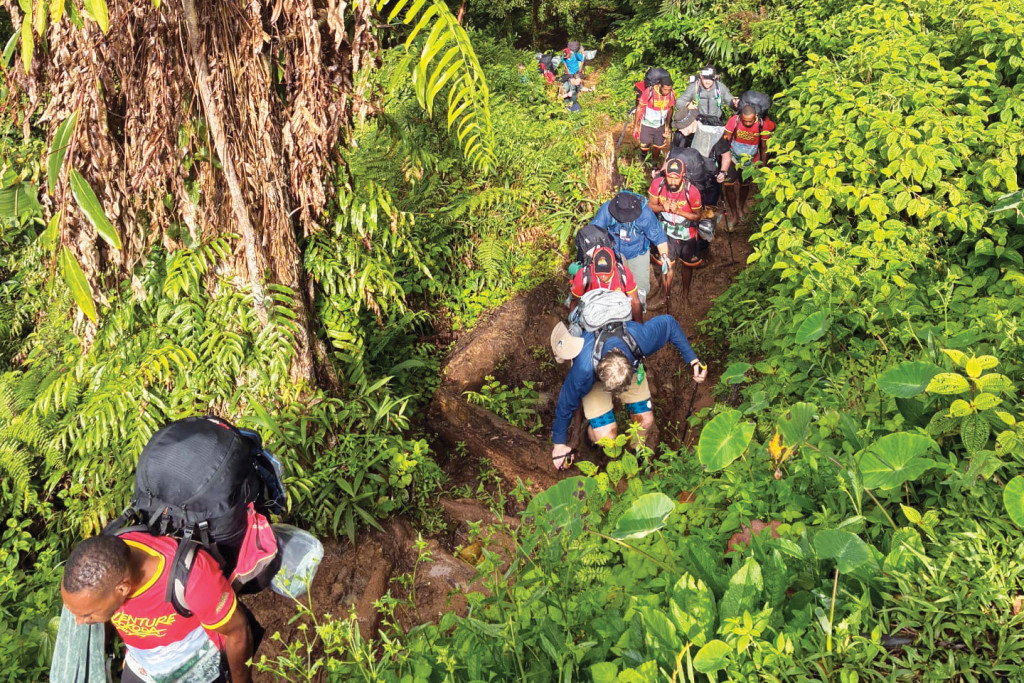
Taking small steps on the Kokoda Track. Lots of them!
Into the Jungle
The trek itself is unlike anything I’d experienced. It isn’t a ‘track’ in any traditional sense; it’s navigating deep jungle, traversing ridges, dealing with constant mud, tree roots, and constant steep inclines and declines. You’re wet the entire time from sweating in the humidity or from pouring rain.
Our days followed a punishing rhythm: wake at 4.30am, quick breakfast, and set off by 5.30am. We’d then trek until 5pm. Accommodation was basic one-man tents. Food was simple with lots of carbs. We washed in rivers, used the jungle as our bathroom, and turned discomfort into fun.
Each of us had an individual porter carrying our main pack of about 20kgs while we carried day packs of 8–10kgs. Our group of porters were a constant support system, preparing meals and setting up camp. Learning about the wartime porters made this even more powerful. They carried food and supplies, transported injured soldiers to safety, and navigated this brutal terrain, many of them barefoot. Their strength and selflessness were vital to the Australian soldiers’ survival.
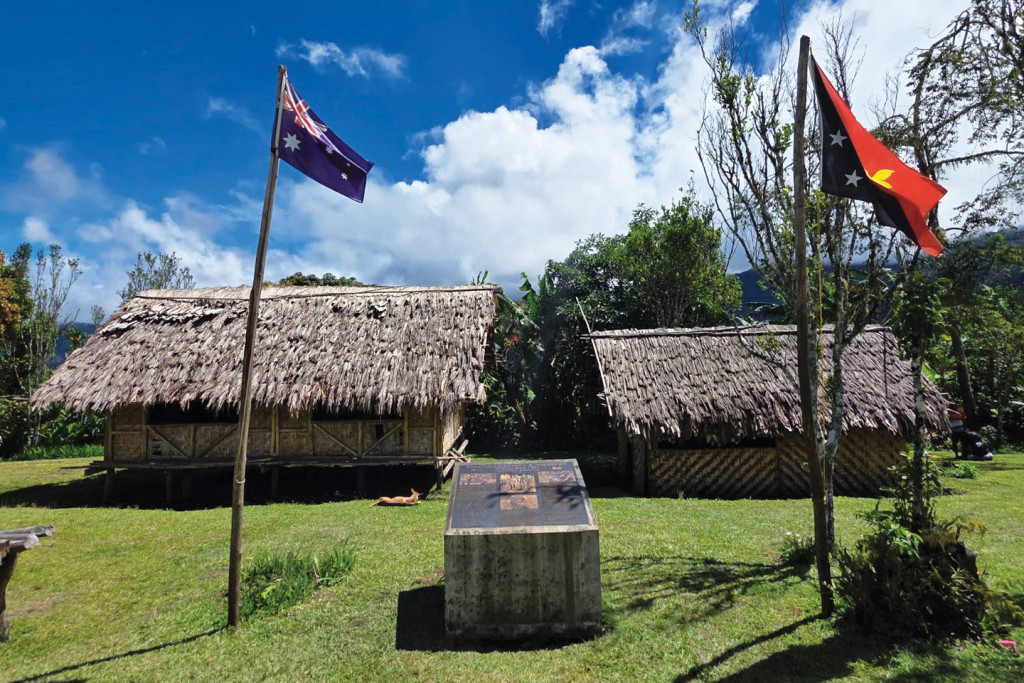
Papuan Soldiers and Carriers Memorial Naduri
The toughest section was Brigade Hill. We trekked from Port Moresby to Kokoda, and Brigade Hill felt like walking up a near-vertical, slippery incline for five hours. We pushed through by literally taking one step at a time. You focus on the person in front of you – usually a porter or a mate – and place your feet exactly where they step. Rhythm, patience, and persistence were key, plus plenty of laughs along the way.
One of the great benefits of doing such a historic trek was the daily reflection. Each morning, we’d discuss what lay ahead and what those locations meant during the war. Our trek leader ‘Handbags’ was an ex-soldier deeply familiar with the wartime history. As we crossed peaks and ridges, we stopped at significant battle sites where he shared stories of what happened there. We saw remnants of small dugouts where soldiers would dig in along ridgelines. Standing there, experiencing the jungle at its most challenging, I kept thinking: could you imagine doing this knowing the enemy was out there trying to kill you? While we were simply trekking, they were fighting for their lives.
The memorial at Isurava was particularly moving. Learning how outnumbered the Australian soldiers were, yet seeing how clever, tough, and resilient they remained was incredibly impressive. The Four Pillars of Kokoda – Mateship, Sacrifice, Courage, and Endurance – aren’t just words. They’re embodied in what those young soldiers did on this ground.
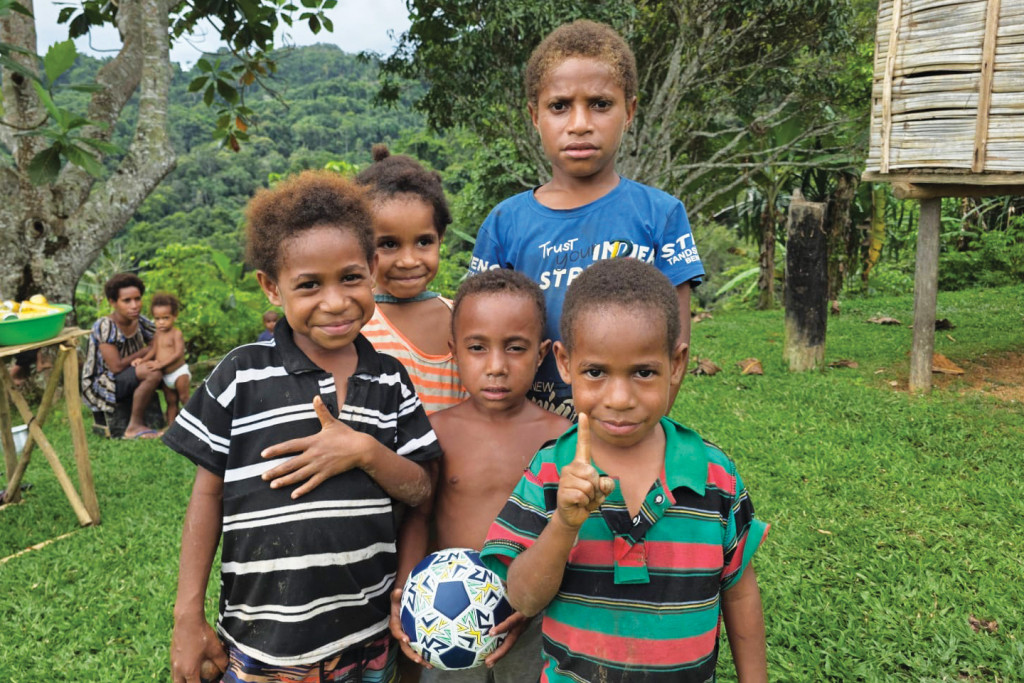
Gifting the local kids a football
Brotherhood on Track
Of course, taking on the Kokoda Track with my mates made it even more significant. Being completely present without our phones, we had funny conversations, deep chats, constant banter, and a bit of mickey-taking. We
relived old school stories and shared
new ones around campsites. There were hilarious moments like when one mate slipped on a steep section, his feet moving like Fred Flintstone as he tried to stay upright! Another mate slid down a ridge, hanging on for dear life before porters caught him (don’t try this at home, kids!). Once, while bathing during a torrential storm, another mate’s clothes disappeared downstream as we all scrambled out laughing ‘from an incoming flash flood’.
On our final day, we visited Bomana War Cemetery. Standing at Uncle Frank’s headstone, surrounded by over 4,000 graves of young soldiers who lost their lives fighting for our country, was very emotional. The cemetery is beautifully maintained, reflecting the appreciation both PNG and Australia have for these soldiers.
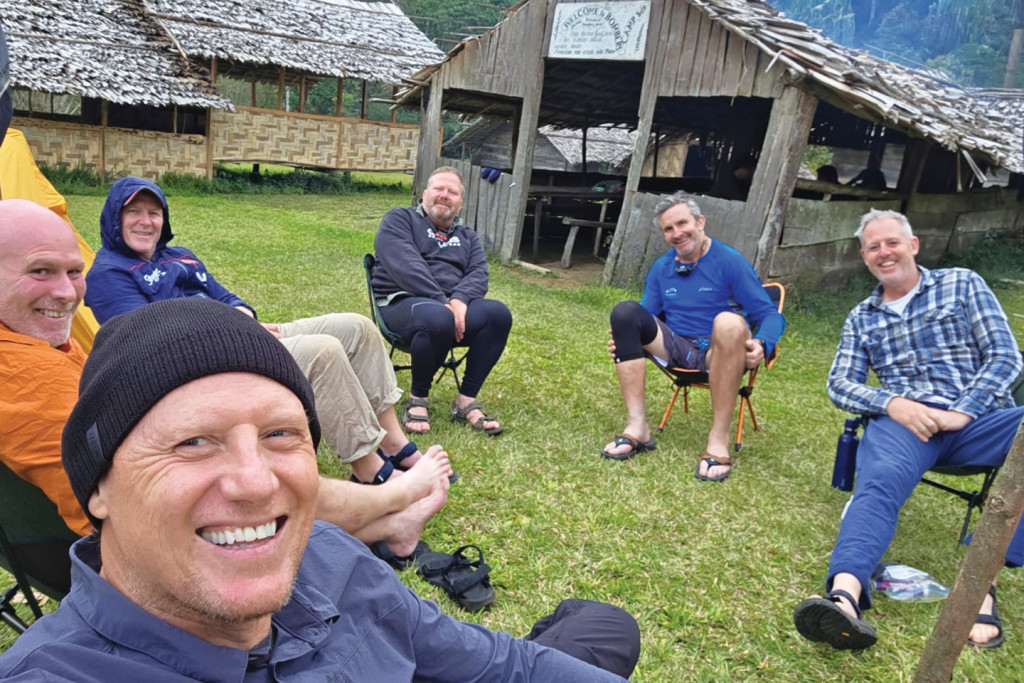
Kicking back after a hard day
Travelling to PNG was a wonderful opportunity to honour their sacrifice and celebrate my family’s history. Living overseas for 28 years, I’ve always had a major love for Australia and a strong connection to family, but walking that track, understanding how pivotal the Battle of Kokoda was to Australia’s freedom, brought everything into sharp focus. The incredible opportunities I had growing up in Canberra, from my education to the football experiences that shaped me, were all built on the sacrifices of those soldiers.
For those considering Kokoda, my advice would be to just do it. Physical preparation is crucial to ensure you can enjoy it, but equally important is gaining an insight into the history before you go. If you can immerse yourself in the resources available, the richer and more meaningful the experience will be.
As for our group’s next adventure, options range from travelling to Everest Base Camp to seeing the Hong Kong Sevens. What matters most though, is coming together again and creating more lasting memories. Standing in the Papua New Guinea jungle at dawn, surrounded by my oldest mates and following in my grandfathers’ footsteps, puts what really matters in life into perspective.”
Read more travel stories in our Travel section here